
CONCRETE RECYCLING
Little Sand, Lots of Coarse Grit
Recycled concrete as a resource
HIGH QUALITY —RESOURCE- EFFICIENT AND COST-EFFECTIVE
Raw materials are getting scarcer — and reusing construction waste at the highest possible quality level is becoming a real competitive factor. RC concrete, once used almost exclusively for backfilling or low-grade applications, is increasingly expected to replace natural aggregates in new concrete. That’s good news for resource efficiency — but it places the highest demands on the recycling process.
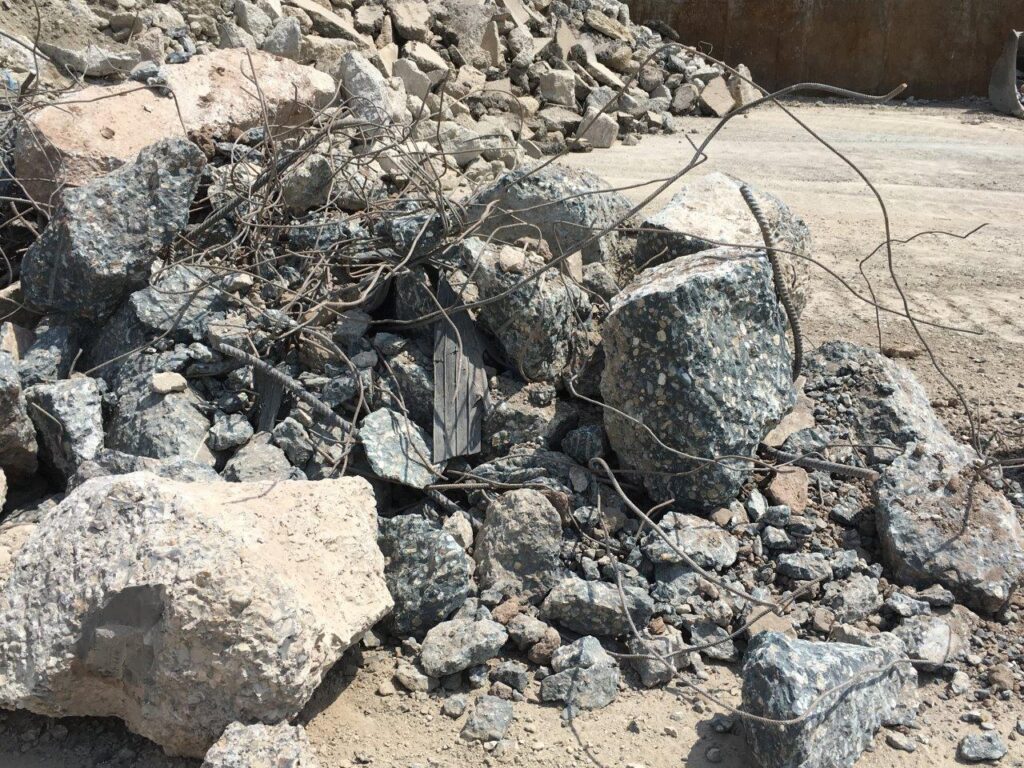
The biggest issue with conventional crushing of construction waste: high amounts of fines and crushed sand. They can make the recycled material unusable and squeeze the economics. Reject material has to go to landfill, surplus fractions are sold at a discount or simply stockpiled.
To make concrete and construction-waste recycling truly resource-efficient and cost-effective, you need gentle crushing — the kind that prevents the formation of fines and excess crushed sand in the first place.
The primary crushing stage
PRE-CRUSHING —EFFICIENTLY SHRED LARGE CONCRETE BLOCKS
Edge length and particle size define what a crushing plant can actually handle — and traditionally, that limit has been quite low. The result: high pre-crushing costs for demolition contractors. Conventional crushing plants for construction waste and concrete typically accept feed sizes of up to 700 mm. Anything larger risks clogging the crusher, damaging it, or accelerating wear disproportionately.
The primary crusher from Crush + Size Technology removes that bottleneck almost entirely. It easily handles feed sizes with edge lengths of up to 1,700 mm and thicknesses of around 700 mm — quickly and reliably.
Inside the primary stage
PROCESS CHARACTERISTICS (PRIMARY STAGE)
The primary crusher impresses with its direct, efficient feed system and coarse pre-crushing to 0–250 mm. Pre-screening is not required — smaller particles simply pass through the crushing chamber untouched. The feed can be introduced directly or via a vibrating chute.
The crushing gap is hydraulically adjustable, and that same hydraulic system forms the core of the overload protection: when non-crushable foreign objects appear, one roller moves aside and returns to its initial position immediately afterwards.

Efficiency of the primary stage
COST-EFFECTIVENESS AND ENERGY EFFICIENCY (PRIMARY STAGE)
A DRC 900-20 primary crusher can replace much of the preparatory work normally done by crawler excavators with pulverisers and hydraulic hammers — work that is expensive and that drives up the fines content in both feed material and final product.
The average power consumption of our primary crusher is extremely low — a fraction of what excavator attachments require. With a throughput of 200 t/h, the DRC 900-20 makes the cost-benefit case for itself.
Another upside: the primary crusher produces very little fine material. That paves the way for a coarse-grained, high-quality recycled material in the next crushing stage.
The secondary crushing stage
SECONDARY CRUSHING — HIGH-QUALITY RECYCLED AGGREGATE
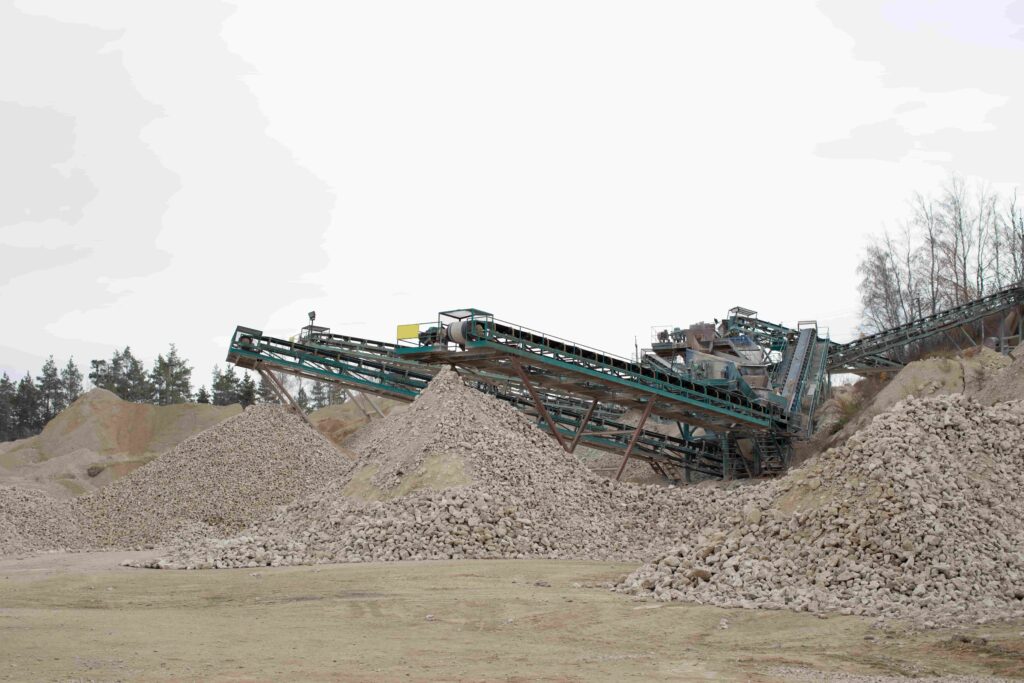
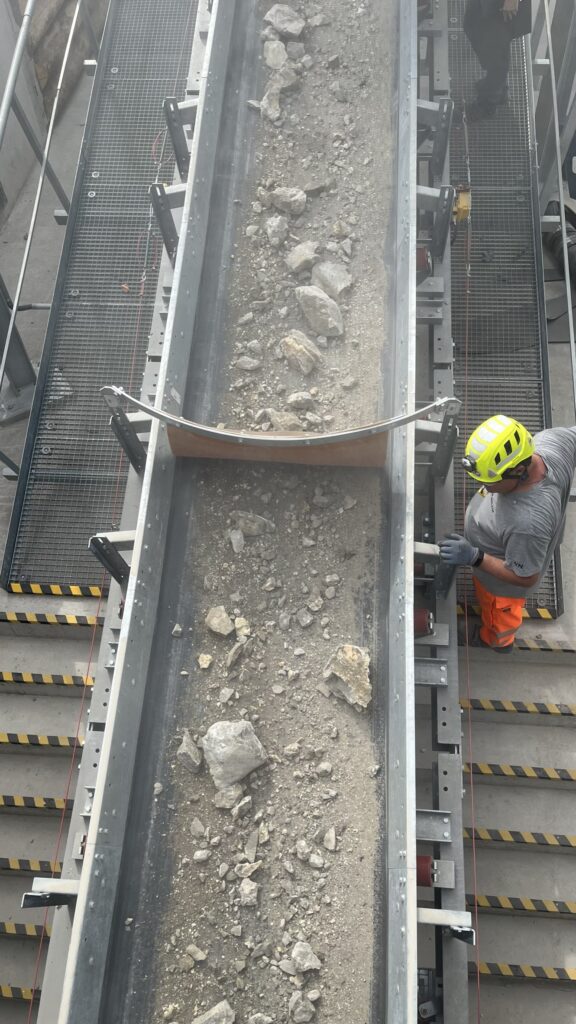
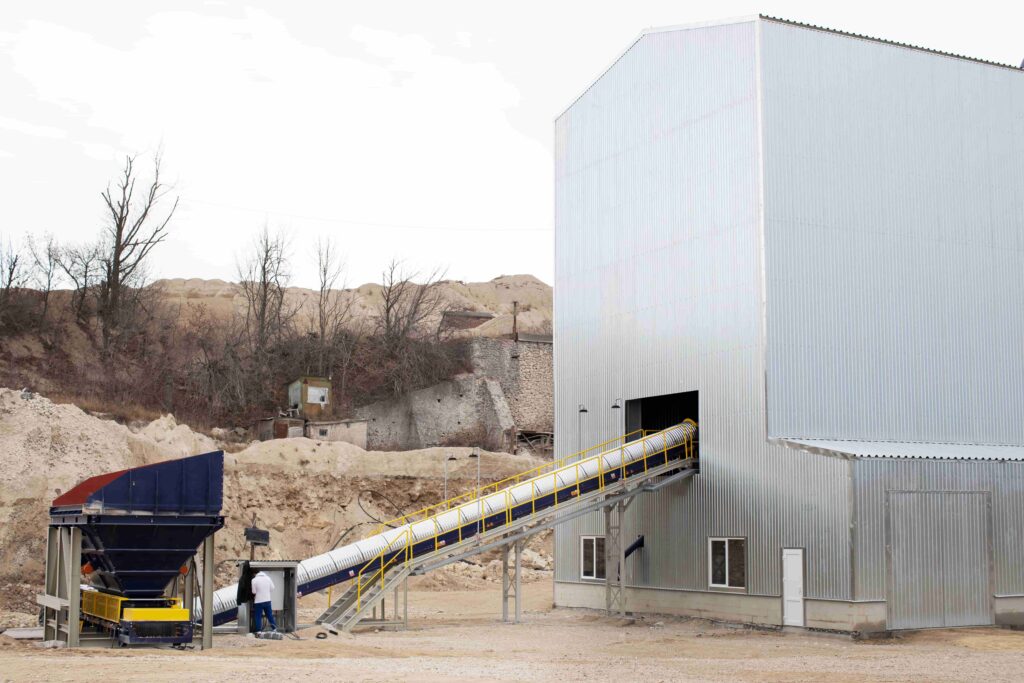
The pre-crushed material reaches the secondary crusher and is processed into a mix with a high share of coarse aggregate. Along the way, the concrete is fully separated from the reinforcing steel. Because the process is gentle, wear stays minimal and dust emissions are kept very low. Aggregate sizes from 0 to 63 mm can be produced economically.
Our recommendation for the secondary stage: the double-roll crushers of the DRC series.
Inside the secondary stage
PROCESS CHARACTERISTICS (SECONDARY STAGE)
Just like in the primary stage, the secondary crusher’s efficiency is driven by direct feed and a high reduction ratio. Pre-screening is not strictly necessary — smaller particles pass through the crushing chamber unchanged. Feeding works directly or via a vibrating chute.
The crushing gap is hydraulically adjustable and forms the heart of the overload protection: if non-crushable objects appear, the roller moves aside and returns to its original position right after.
Efficiency of the secondary stage
COST-EFFECTIVENESS AND ENERGY EFFICIENCY (SECONDARY STAGE)
Thanks to the special tool contour and the synchronised roller movement, the crushing tools work the feed material in a way that effectively separates foreign objects by pressure and shearing. A steel separator can then remove the steel content with high purity.
A key feature of the crushed material is its high share of valuable fractions. A target particle size of 0–63 mm is typical for secondary crushing, and the highest yield of valuable product is achieved in a closed circuit.
Foreign materials such as wood or plastic are not crushed further — so they can be removed quickly with standard separation methods, and they don’t pollute the recycled material with unwanted fines.
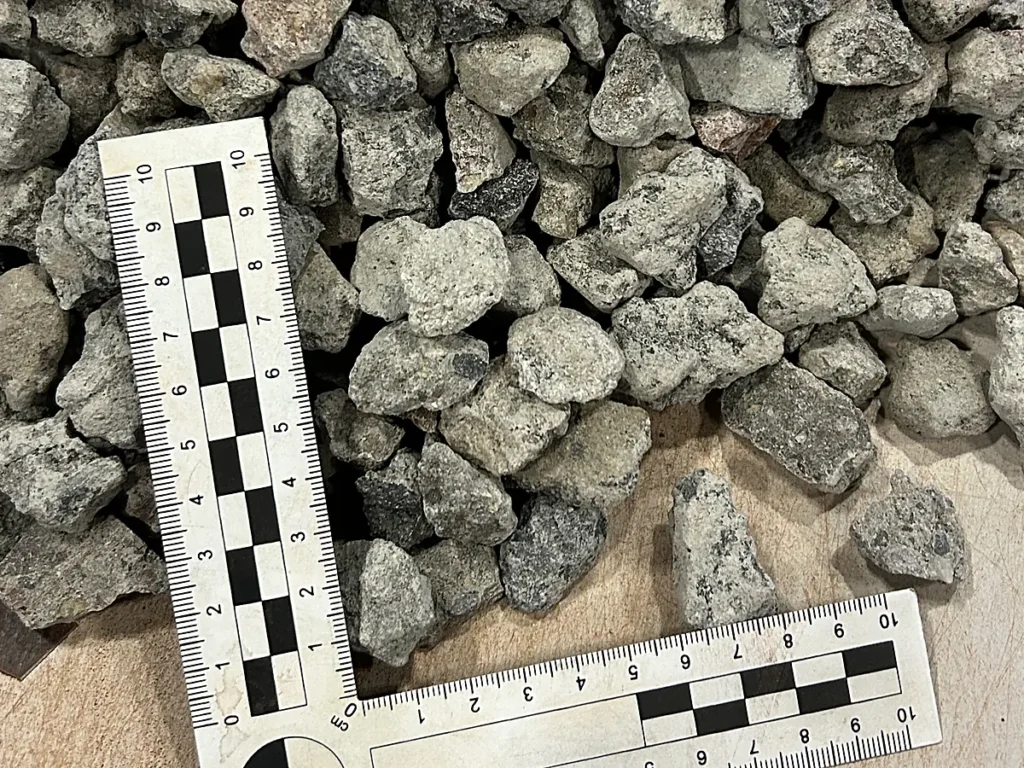
CRUSHED GRAVEL, 5.6–8.0 MM
The recycled end product
PRODUCTION OF CONCRETE AGGREGATES
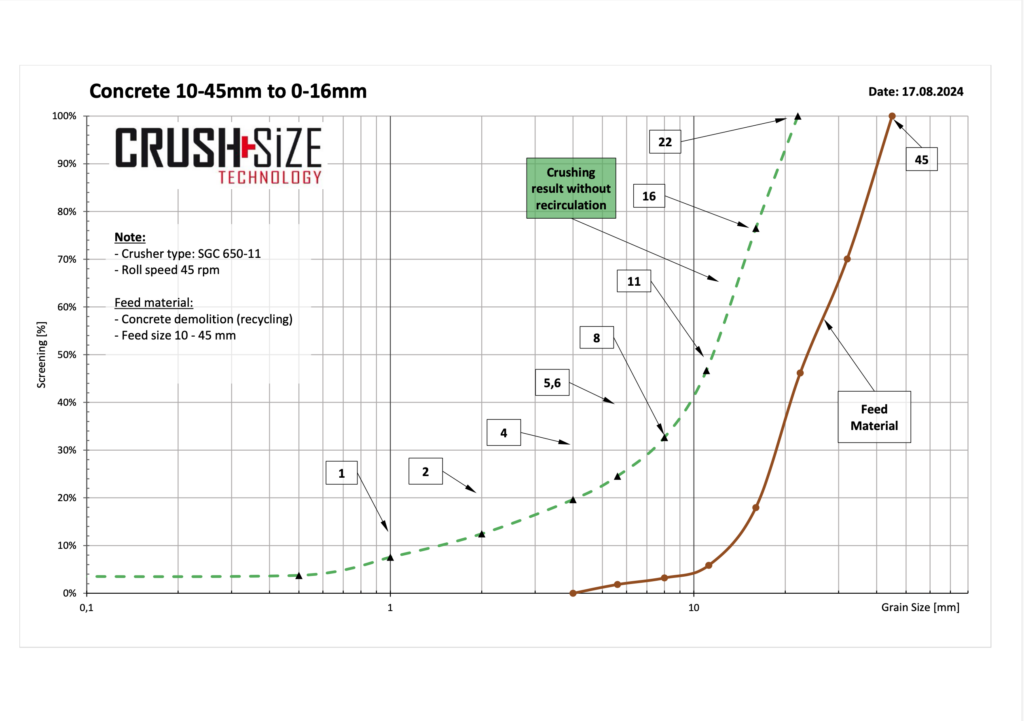
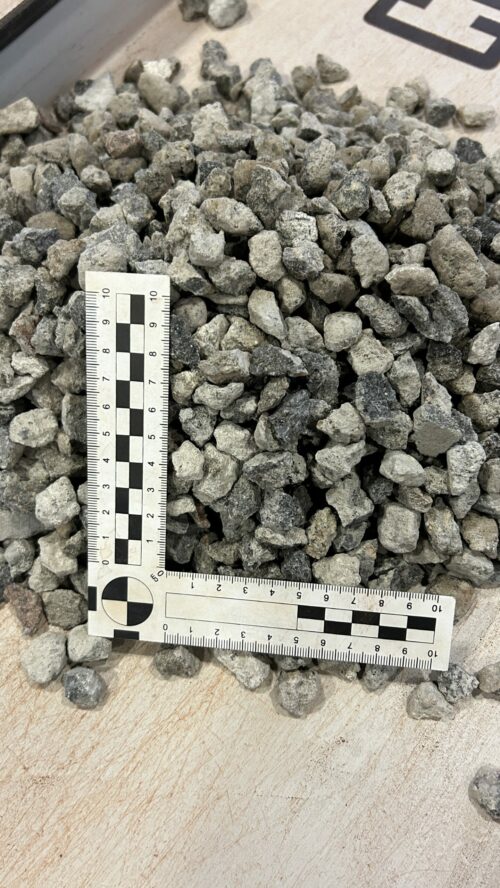
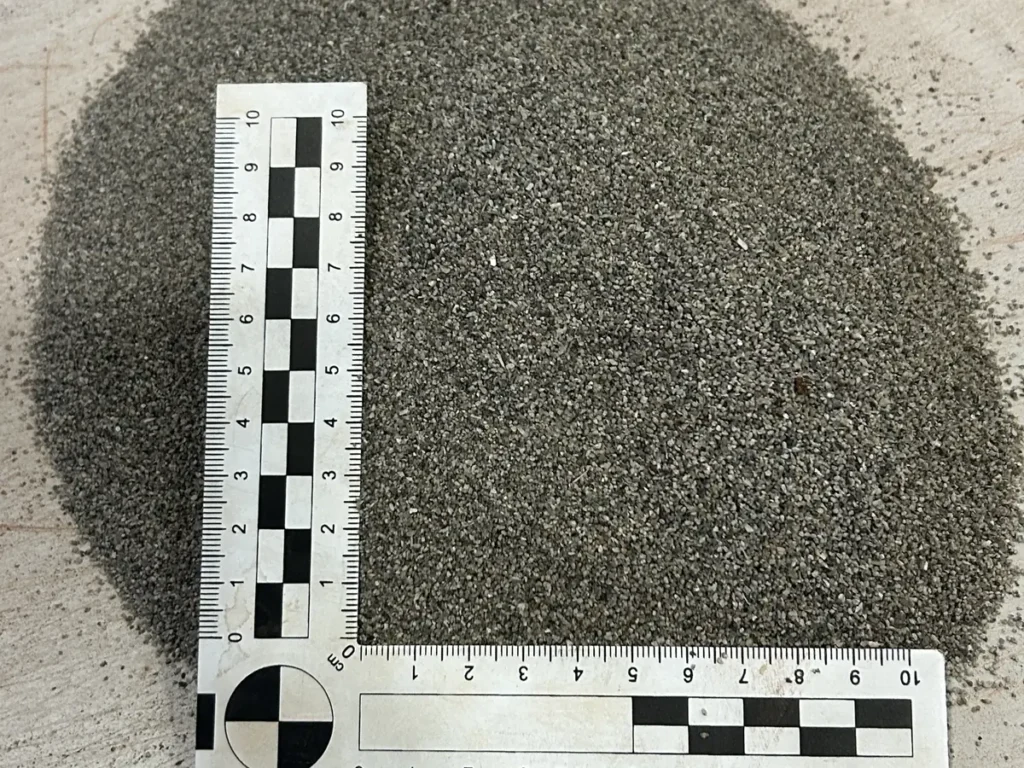
The result is a final particle size distribution with a high share of coarse and medium fractions, very little sand and powder — and an excellent grain shape. The grading curve comes very close to the ideal for concrete aggregate. From a feed of 0–63 mm, for example, you can produce material below 22 mm with a remarkably low sand content.
A substitute for natural stone
CONCRETE AGGREGAtE INSTEAD OF NATURAL STONE
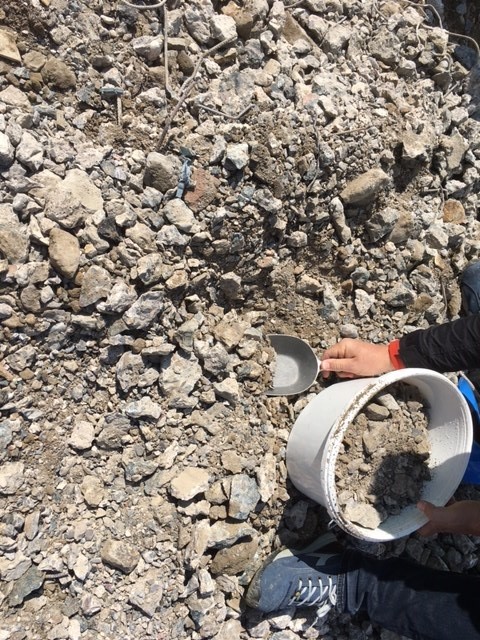
The pre-crushed material (0–32 mm to 0–63 mm) needs to be crushed in a way that gets it as close as possible to the properties of natural aggregate — only then can it be fed back into the concrete production process.
In ordinary concrete, aggregates form the supporting matrix; their voids are minimised and filled with cement paste. That function places strict demands on maximum particle size, grading curve, fines content, water demand — as well as on grain shape and stability. Recycled concrete aggregates have to meet exactly the same standards as natural aggregates.
Crush + Size SGC technology is a double-roll crusher with a rolling mill specifically designed for smaller fractions, in particular concrete aggregates from recycled concrete (0–11 mm to 0–22 mm). The slowly rotating rollers work with high torque, avoiding unwanted fines from the start. An intelligent control system lets you flexibly steer the crushing result and adjust the grading curve.
CRUSH + SIZE TECHNOLOGY GMBH & CO. KG
- Particle sizes as needed: 0–16 / 0–22 / 0–32 / 0–45 / 0–56 / 0–80 / 0–120 / 0–170 mm — smaller sizes on request
- Grading curve: evenly distributed, with a higher share of larger particles
- Oversize: virtually nonexistent - the crushing zone is geometrically bounded in 3D space
- Fine particles: very small share, depending on the feed material
- Crushed sand: small share, depending on the feed material
- Steel reinforcement: cleanly separated from the concrete
- Foreign objects: no problem — the roller moves aside, the chamber clears, and production continues without interruption
- Grain size distribution and shape: characteristic distribution with a higher share of coarse fractions

Practical example — frost-resistant grit base courses
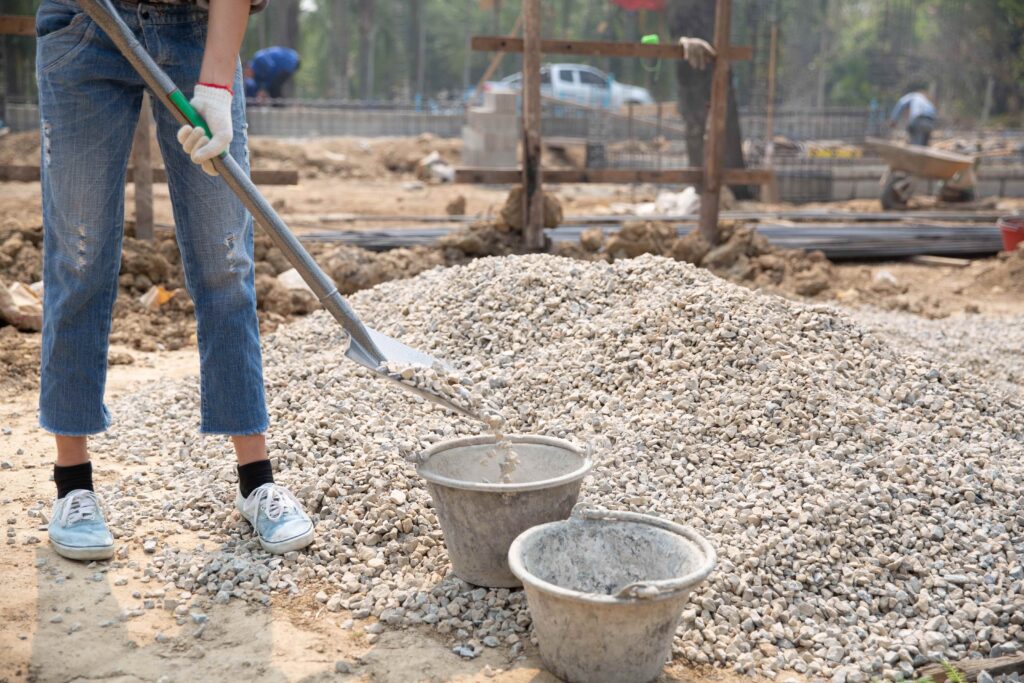
The low sand and fines content delivers excellent water permeability and reliable frost resistance. Depending on the feed material and process, you may even need to add sand back into the mix — which means you can reuse the sand that other processing steps usually leave behind, instead of sending it to landfill.
To stay within the legal limits for frost protection layers and gravel base courses during handling and compaction, the share of finer fractions has to be kept low. That’s the only way to guarantee water permeability and frost resistance once the material is fully installed.